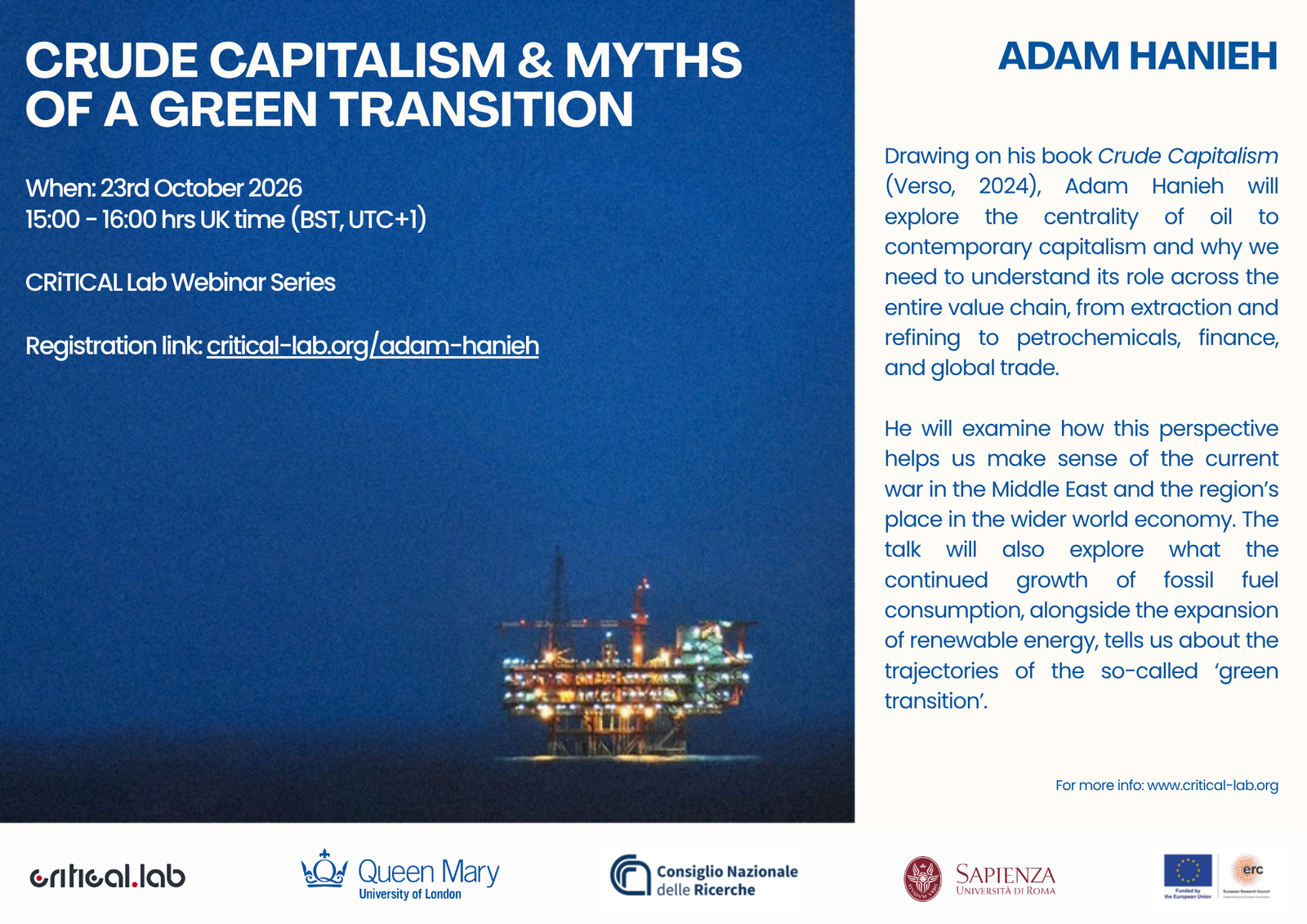
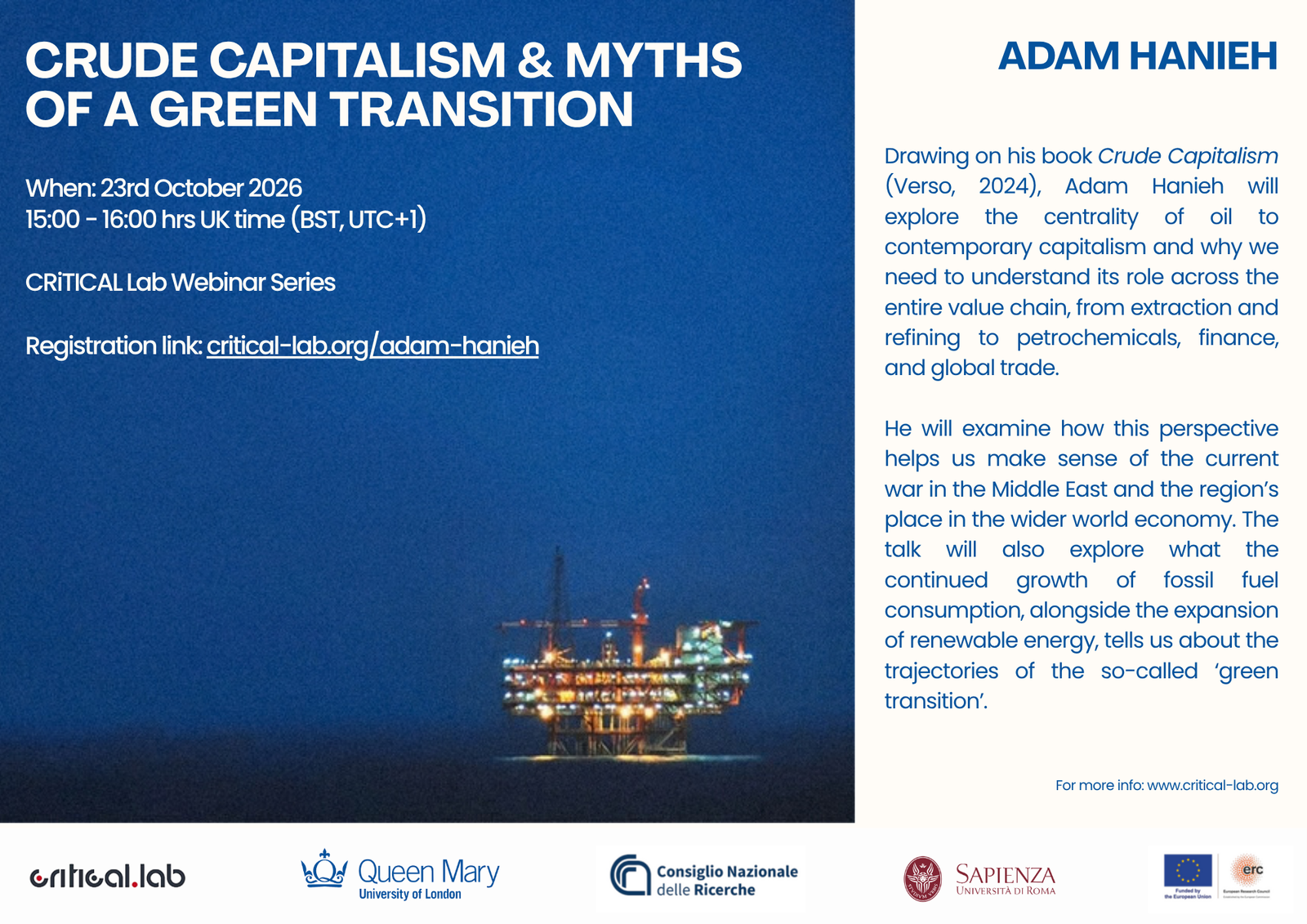
Drawing on his book Crude Capitalism (Verso, 2024), Adam Hanieh will explore the centrality of oil to contemporary capitalism and why we need to understand its role across the entire value chain, from extraction and refining to petrochemicals, finance, and global trade.
He will examine how this perspective helps us make sense of the current war in the Middle East and the region’s place in the wider world economy. The talk will also explore what the continued growth of fossil fuel consumption, alongside the expansion of renewable energy, tells us about the trajectories of the so-called ‘green transition’.
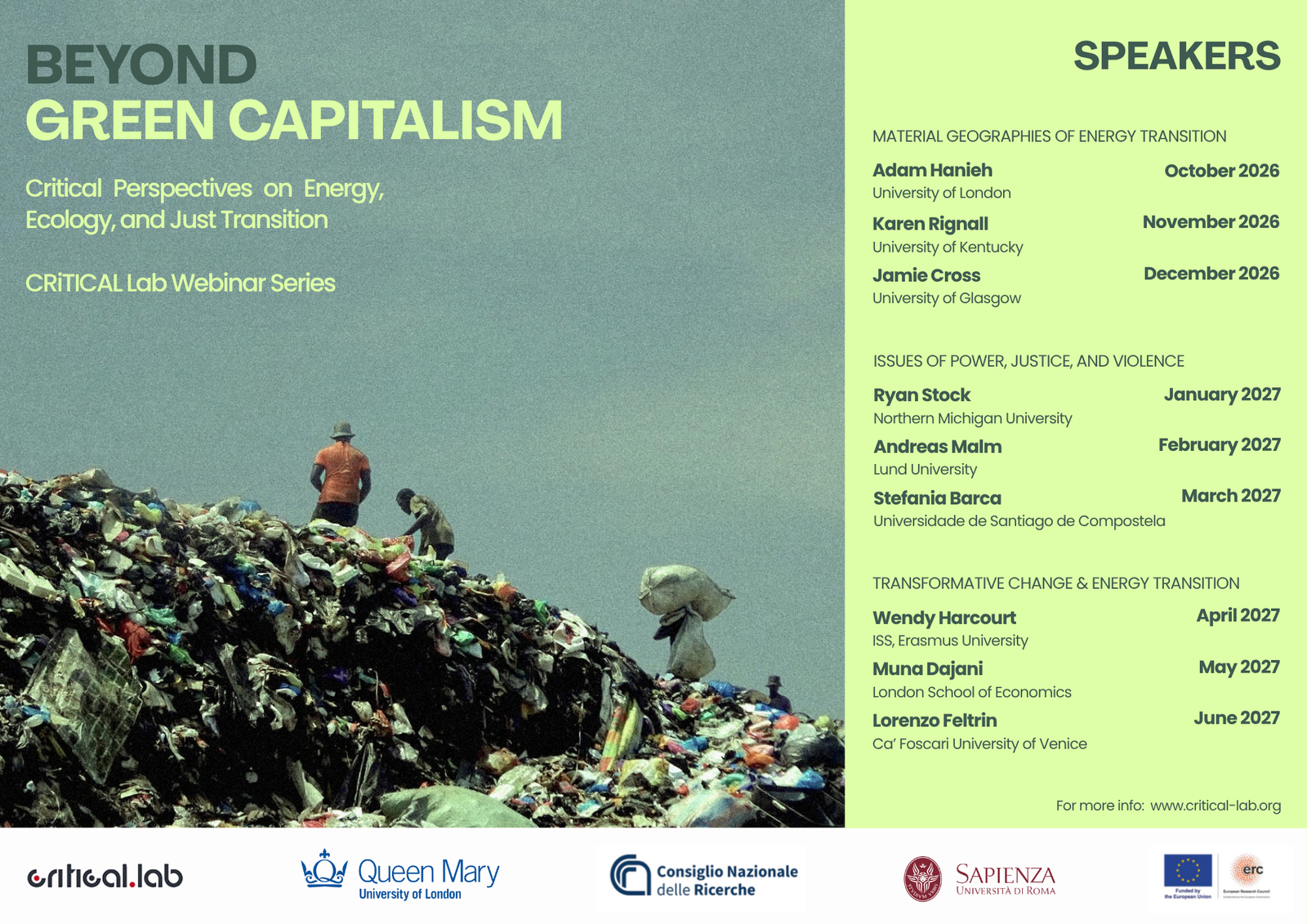
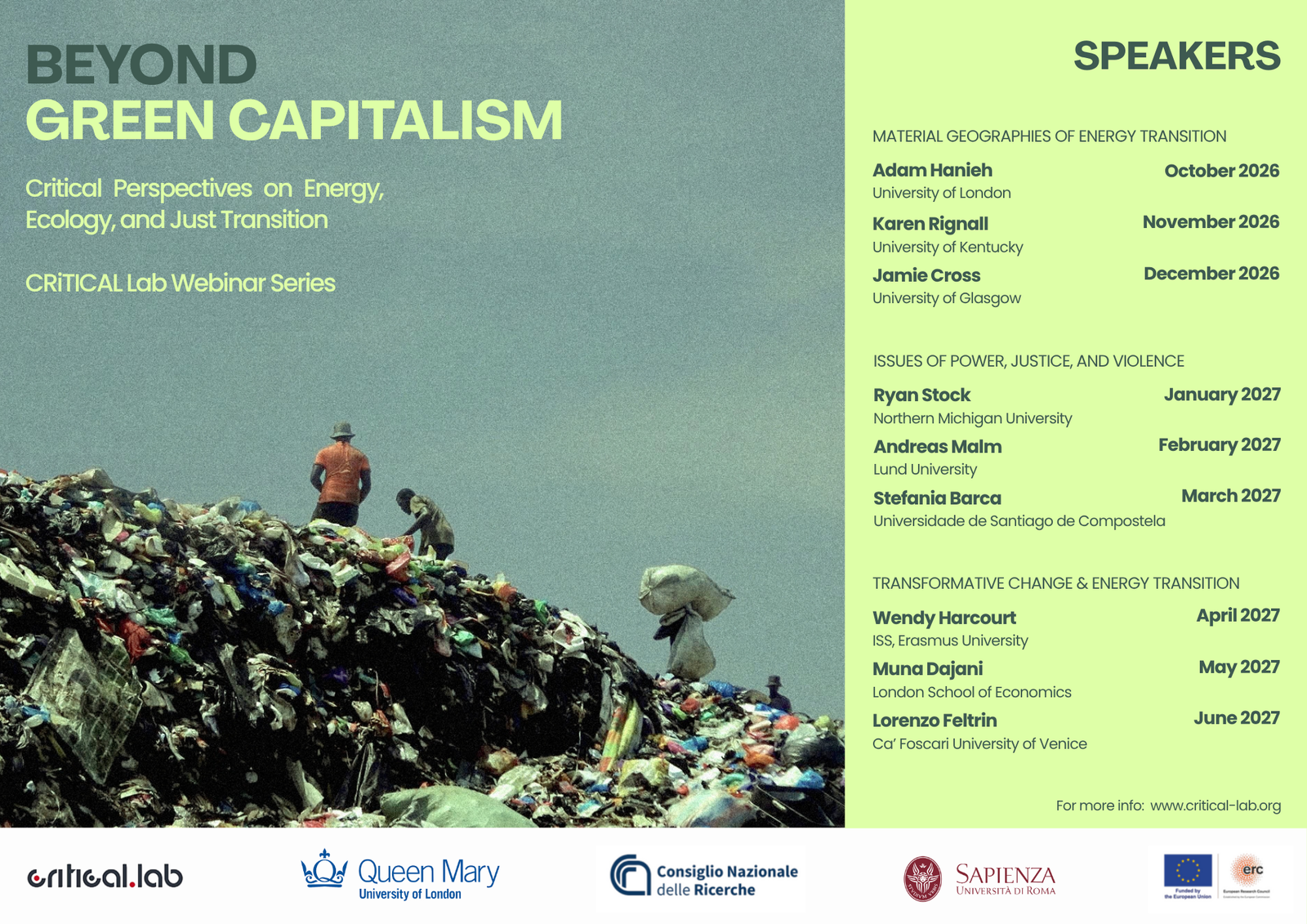
For decades, environmental scholars have called for retiring fossil fuels and rapidly deploying renewable energy, warning of escalating climate crisis and the devastating costs of fossil capitalism. However, as renewable energy development expands globally, it has become increasingly evident that these “green” alternatives carry their own profound costs and trade-offs. Far from being inherently sustainable or equitable, renewable energy infrastructures are reproducing and, in some cases, intensifying patterns of land dispossession, environmental degradation, and social inequality. A just energy transition therefore demands not merely a shift in energy sources, but sustained critique, organized resistance, and transformative movement-building to challenge how, where, by whom, and for whom energy is developed. This webinar series examines these questions through critical analysis of extraction, infrastructure, power relations, and possibilities for transformative change.
The current geopolitical moment makes these questions especially urgent. Amid the ongoing deadly US-Israeli war on Iran and escalating tensions over energy resources, the violent consequences of how energy transitions are organized become undeniable. Military conflicts in energy-rich regions expose how fossil fuel dependencies continue to fuel violence, displacement, and environmental destruction. Beyond the human cost, these crises threaten to derail climate action and renewable energy development. The current moment underscores that energy transitions cannot be separated from questions of war, imperialism, and international solidarity, making critical examination of power, justice, and alternative pathways even more essential.
The series examines energy transitions as contested processes shaped by power, capital, and social struggle. Rather than focusing solely on technological solutions, we explore the political economies and ecologies of energy across diverse global sites, from renewable energy installations to sites of mineral extraction, from manufacturing facilities to spaces of waste and disposal, and from zones of resource conflict to spaces of resistance and alternative organising.
For further information on registration for upcoming webinars, please visit this page regularly for updates. We look forward to welcoming you to the series!